From Hospital Transfer to Freebirth: Emily Swann's Three Homebirth Stories
Aug 24, 2026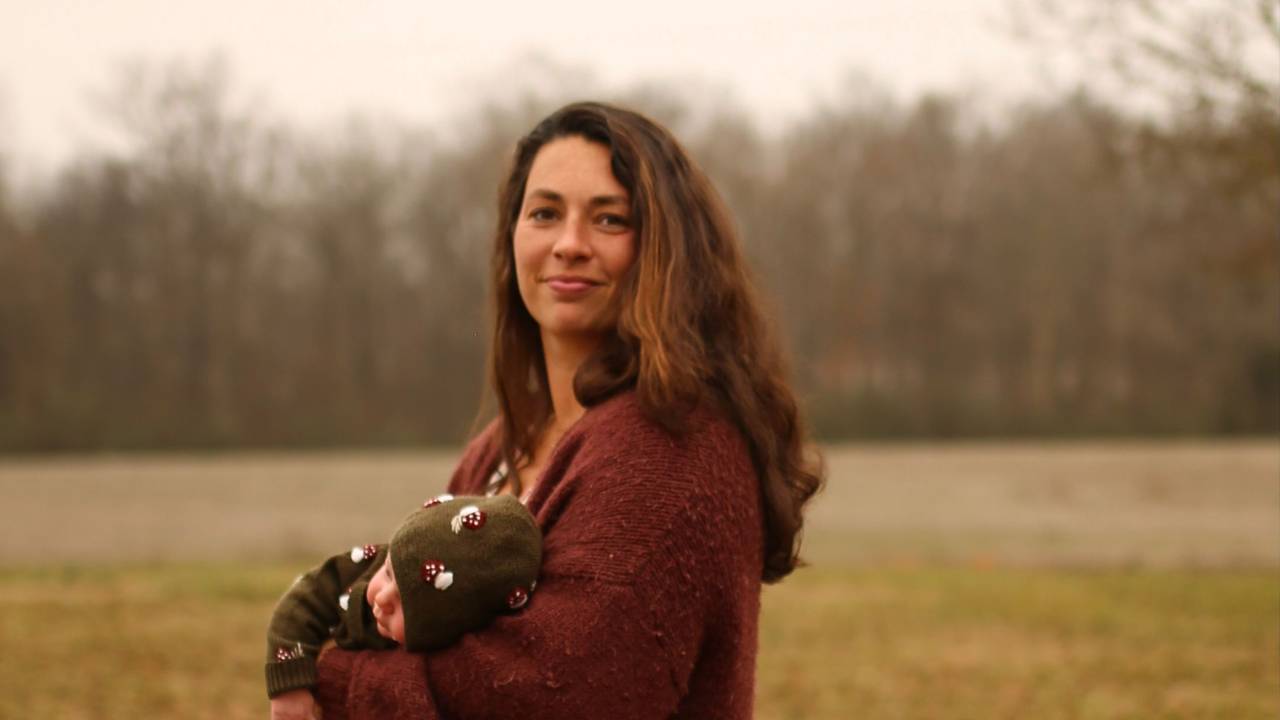
She had all the information. It wasn't enough.
Emily Swann binge listened to every episode of the Happy Homebirth Podcast before her first baby was born. She read the books. She watched the documentary. She was a labor and delivery nurse with a master's degree in public health and nutrition, and she had been in the room for more births than most women will ever attend.
Her first birth lasted four days.
In this episode of the Happy Homebirth Podcast, Emily walks through three births that share almost nothing on the surface– a planned homebirth that ended in a hospital transfer, a preterm birth and a NICU stay, and an unassisted birth at home– and one thread that runs through all of them. She names it herself, and it may be the most useful sentence in the whole conversation: "I had too much information and not enough heart."
The first birth: prepared on paper, waiting to be rescued
Emily was pregnant, working night shifts, vegan, and throwing up so persistently she was giving herself IVs at work. She was planning a homebirth without fully knowing why. She had a midwife she describes as nice. And she was, in her own words, lacking a lot of personal responsibility– still carrying the mindset that her midwife would deliver her baby, and therefore held the control.
For nine months she said she did not want cervical checks. When her midwife arrived and offered one, Emily said yes.
What followed was four days of labor with a room full of onlookers, repeated checks, and a mother present who called the whole thing barbaric out loud. Emily began pushing at five centimeters. Her cervix swelled. She transferred.
And then something worth sitting with: at the hospital, she relaxed. Her friends were there. Her daughter's godmother helped catch the baby. She got the epidural she was begging for, and after a vacuum-assisted delivery, she describes the birth itself as lovely.
A transfer is not a failure. Emily's own account is the argument.
The second birth: a fever nobody could explain
Her second pregnancy looked different. New midwife. Twenty weeks of sun and good food and no nausea. And then, at 34 weeks, a virus that gave her a 105 degree fever for eleven days.
Her water broke at 35 weeks. She called her midwife, asked honestly what the odds were that Bowie was sick too, heard "probably high," and went in. She pushed him out in a hospital bathroom with one midwife and her husband, and she still calls it sweet.
He went to the NICU for two days. She would not let them bottle feed him. A week later, both of them were readmitted with the same fever. The workup found nothing– not meningitis, not anything. Her fever broke the moment he was born. Both of them recovered, and she protected breastfeeding through all of it.
The third birth: no audience at all
By her third pregnancy, Emily had decided. No midwife. No prenatal testing. No one in the room, including her husband.
She spent that pregnancy outside, eating well, and– her word– connecting. She woke one November morning certain she'd have the baby that day, and she cooked an entire Thanksgiving dinner in labor. Her father ate and left. She did the farm chores. She went upstairs at four in the afternoon, and by evening she was in a dark little bathroom with a pillow, facing the back of the toilet, sweating in a way she'd never sweated in her life.
Ten minutes after telling herself to get her life together, she was pushing. Arthur was born just before seven o'clock, en caul, and she picked him up herself and started laughing.
She did not describe it as pain-free because she was tougher. She described it as a birth that asked one thing of her: "You cannot escape it. You have to be right here."
And it still cost her. She pushed fast and hurt herself. Her placenta took nearly two hours. She developed a hematoma the size of a baseball and spent three weeks in bed and about eight weeks healing.
Witness before you fix
Emily's work grew directly out of the hardest parts of this story. She became an IBCLC reluctantly, while crying every day over feeding her daughter. Today she runs For the Love of Breastfeeding, teaching a bodywork course for babies and a six-month program for mothers.
Her whole model has moved from fixing to teaching, and the reason she gives is sharp: the magnifying glass is on babies because babies can't feel shame yet, and mothers can. So we chase the tongue tie and the next appointment on the list, and nobody asks the mother what's happening in her.
One more thing, and it matters. Emily says plainly that if she had heard this episode before her first baby, I'm going rogue would not have been helpful for her. She was afraid. She wanted her hand held. Her third birth wasn't a shortcut anyone can take– it was the fruit of two births' worth of becoming.
Listen to the full episode:
Apple Podcasts: Emily's Story
Spotify: Emily's Story
YouTube: Emily's Story
Frequently asked questions
What is a freebirth, or unassisted birth?
A freebirth is a birth a woman plans and carries out without a midwife, doctor, or other trained birth attendant present. It's distinct from an unplanned precipitous birth. Some women who choose it also decline prenatal testing and care. The American College of Obstetricians and Gynecologists recommends that planned home births be attended by a credentialed provider with hospital transfer arrangements in place.
Happy Homebirth shares unassisted birth stories as testimony to a woman's steadiness, not as instruction. This show does not teach or encourage birthing without a provider. You get to choose your own risk tolerance and where you feel safest.
How often does a planned homebirth transfer to the hospital?
Transfer is common for first-time mothers and uncommon for experienced ones. ACOG reports intrapartum transfer rates of 23–37% for first births and 4–9% for subsequent births. A 2021 study of 10,609 U.S. community births found 30.5% of first-time mothers transferred in labor, compared with 4.2% of mothers who had given birth before.
Most transfers happen for slow progress, need for pain relief, or a fetal heart rate the midwife wants watched more closely– not for emergencies. Building a transfer plan before labor is one of the more useful things a couple can do together, and having the conversation does not invite the outcome.
Can you have a peaceful homebirth after a traumatic first birth?
Yes, and it's one of the most common arcs on this podcast. Women who felt unsafe, unheard, or overwhelmed in a first birth frequently go on to have subsequent births they describe as steady and even joyful.
What tends to change isn't luck. It's authorship: deciding in advance who is allowed in the room, practicing saying no out loud before labor, doing the fear work rather than white-knuckling past it, and choosing a provider whose approach matches what you actually want. Birth trauma is worth processing with a qualified therapist or trauma-informed provider, not just out-preparing.
What is an en caul birth?
An en caul birth is one where the baby is born still fully enclosed in the intact amniotic sac, so the sac emerges around the baby rather than rupturing first. It's often described as the baby being born "in the veil." Case literature estimates it occurs in fewer than 1 in 80,000 births, with preterm and cesarean births overrepresented.
It isn't something you can plan for, and there is no evidence that it makes a baby healthier or a birth better. It's simply a rare and beautiful thing to witness.
What is a hematoma after birth, and when should you call your provider?
A vulvar or vaginal hematoma is a collection of blood under intact skin, usually caused by soft tissue injury during birth. Incidence is roughly 1 in every 300 to 1,000 births. Small, non-expanding hematomas often resolve with conservative care– rest, ice, compression, and pain relief– though healing can take weeks.
Call your midwife or provider promptly for severe or rapidly worsening perineal pain, visible swelling that keeps growing, difficulty urinating, or any signs of significant blood loss such as dizziness, racing heart, or feeling faint. Larger or expanding hematomas sometimes need drainage. This is information, not a diagnosis– anything happening in your body belongs in a conversation with your provider.
This article shares one mother's personal experience and is offered as encouragement and education, not medical advice. Always bring questions about your own pregnancy, birth, and postpartum to a trusted care provider.
Sources
- American College of Obstetricians and Gynecologists, Committee Opinion 697: Planned Home Birth (reaffirmed) — https://www.acog.org/clinical/clinical-guidance/committee-opinion/articles/2017/04/planned-home-birth
- Nethery E, et al. Birth Outcomes for Planned Home and Licensed Freestanding Birth Center Births. Obstetrics & Gynecology, 2021 — https://journals.lww.com/greenjournal/fulltext/2021/11000/birth_outcomes_for_planned_home_and_licensed.2.aspx
- Malik R, et al. Extremely Preterm Vaginal Cephalic Delivery En Caul. Case Reports in Obstetrics and Gynecology, 2018 — https://www.ncbi.nlm.nih.gov/pmc/articles/PMC5952438/
- Vulvar Hematoma. StatPearls, NIH National Library of Medicine — https://www.ncbi.nlm.nih.gov/books/NBK560753/
- Winkelman J, et al. Delayed presentation of a non-resorbing postpartum vulvar hematoma. Case Reports in Women's Health, 2023 — https://www.ncbi.nlm.nih.gov/pmc/articles/PMC10334312/
Lorem ipsum dolor sit amet, consectetur adipiscing elit. Cras sed sapien quam. Sed dapibus est id enim facilisis, at posuere turpis adipiscing. Quisque sit amet dui dui.
Stay connected with news and updates!
Join our mailing list to receive the latest news and updates from our team.
Don't worry, your information will not be shared.
We hate SPAM. We will never sell your information, for any reason.