A Homebirth Story of Faith, Fear, and Trusting Harder
Jul 20, 2026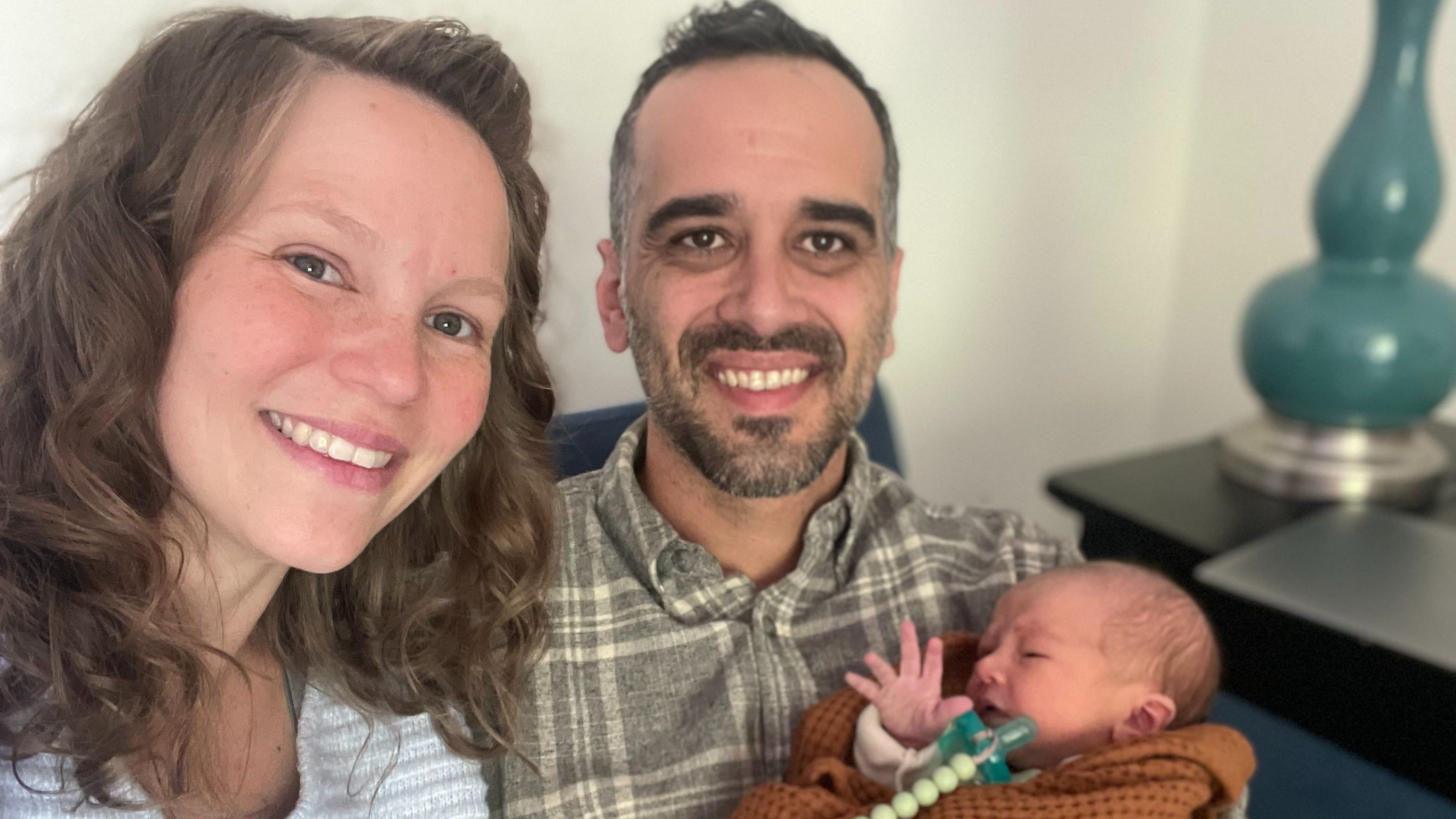
Some birth stories are peaceful. Some are dramatic. And some, like Tricia Prado's, subtly rearrange the way you think about what a mother is actually capable of carrying.
Tricia is a mother of seven and a five-time homebirther from a small town in Northern Idaho, where she and her husband, James, run their family roofing business. For years, her births had grown more peaceful with each one — a snowstorm baby by firelight, a Fourth of July baby born to fireworks. She thought she knew what to expect.
Then James, a construction contractor and rock climber who "does all the things and does them well," slowly stopped being able to get out of bed. What followed was a long, disorienting search for answers: an ADHD guess, a Hashimoto's diagnosis, a two-week trip to the Mayo Clinic, and eventually a diagnosis of chronic fatigue syndrome and fibromyalgia — none of which quite fit the man they knew. (Much later, a nutritionist would point to micro-clotting as a likely root cause, and his health would finally begin trending up.)
In the middle of that season, Tricia found out she was pregnant with their seventh. The family ended up scattered across three states — the older kids in Florida with her parents, James recovering in Texas, and Tricia back in Idaho with the three littlest, running the business and preparing to give birth largely on her own.
In the episode, Tricia walks us through what that birth was actually like: three days of intense prodromal labor, a midwife's brew to get things moving, and — for the first time in seven births — a moment where she thought, if someone offered me an epidural right now, I'd take it. She's honest about why. It wasn't only the physical pain. It was the grief of James not being there, the emotional weight bleeding into the physical experience, and the strength she had to find in a different place than usual.
What holds the whole story together is a phrase her family adopted in this season: trust harder. They had been trying harder — to fix his health, to keep life working, to hold everything together — and it was breaking them. Learning to trust instead of grip is the thread running through every hard turn, all the way to the moment her baby girl arrived fast and unexpected, with her grandmother in the room and her midwife's assistant whispering, he's with you.
It's a story about faith, about the difference between pain and the fear of pain, and about the community of women who can gather around a mother when she can't do it alone. Whether you're preparing for your own birth or simply walking through a season you can't yet see the end of, Tricia's story is a steady, hope-filled companion.
Listen to the full episode here: Tricia's Story
Watch the full episode here: Tricia's Story
Frequently Asked Questions
Can you have a positive homebirth without your husband or partner present?
Yes. A supported homebirth without your partner present is possible when other trusted support is in place — a midwife, a doula, a close friend, or family. In Tricia Prado's seventh birth, her husband was three states away, yet her midwife, midwife's assistant, and grandmother surrounded her. The key is a prepared support team and emotional readiness for their absence.
Why does fear make labor more painful?
Fear intensifies labor pain through the fear-tension-pain cycle: fear triggers muscle tension and stress hormones, which can slow labor and heighten pain perception. As Tricia's mentor told her, "the pain will not destroy you — but the fear of the pain" can. Addressing fear before birth, through faith, breathwork, and nervous-system regulation, helps many women labor with more ease.
What is prodromal labor and how long does it last?
Prodromal labor is real, often intense labor that starts and stops without progressing steadily into active labor. Contractions can feel strong and regular…sometimes a minute long and minutes apart, yet not increase in intensity. It can last hours or, as in Tricia's case, span several days, which is exhausting but not dangerous. Rest and support matter most.
What is a midwife's brew and what does it do?
A midwife's brew is a labor-encouraging mixture that typically includes castor oil, almond butter, and juice. It's sometimes used to help move a stalled or prodromal labor into active labor. Tricia found the full brew far gentler on her stomach than taking castor oil alone. It should only be used under the guidance of your care provider.
How do you emotionally prepare for a birth when your partner can't be there?
Emotionally preparing for birth without your partner means naming the grief ahead of time, not just planning logistics. Tricia reflected that she'd braced for the physical pain but not for the emotional weight of her husband's absence — which made labor harder. Acknowledging that loss beforehand, and leaning on faith and a trusted support team, helps you enter more grounded.
What does "trust harder" mean?
"Trust harder" was the Prado family's mantra through a season of illness and upheaval. It reframes the instinct to try harder — to fix, control, and hold everything together — into a posture of surrender and trust instead. In birth and in hard seasons, it means releasing the need to see around the curve and trusting that you'll be given what you need, when you need it.
Lorem ipsum dolor sit amet, consectetur adipiscing elit. Cras sed sapien quam. Sed dapibus est id enim facilisis, at posuere turpis adipiscing. Quisque sit amet dui dui.
Stay connected with news and updates!
Join our mailing list to receive the latest news and updates from our team.
Don't worry, your information will not be shared.
We hate SPAM. We will never sell your information, for any reason.