Fast Homebirths, Twin Sisters, and Biologically Normal Sleep
Oct 12, 2026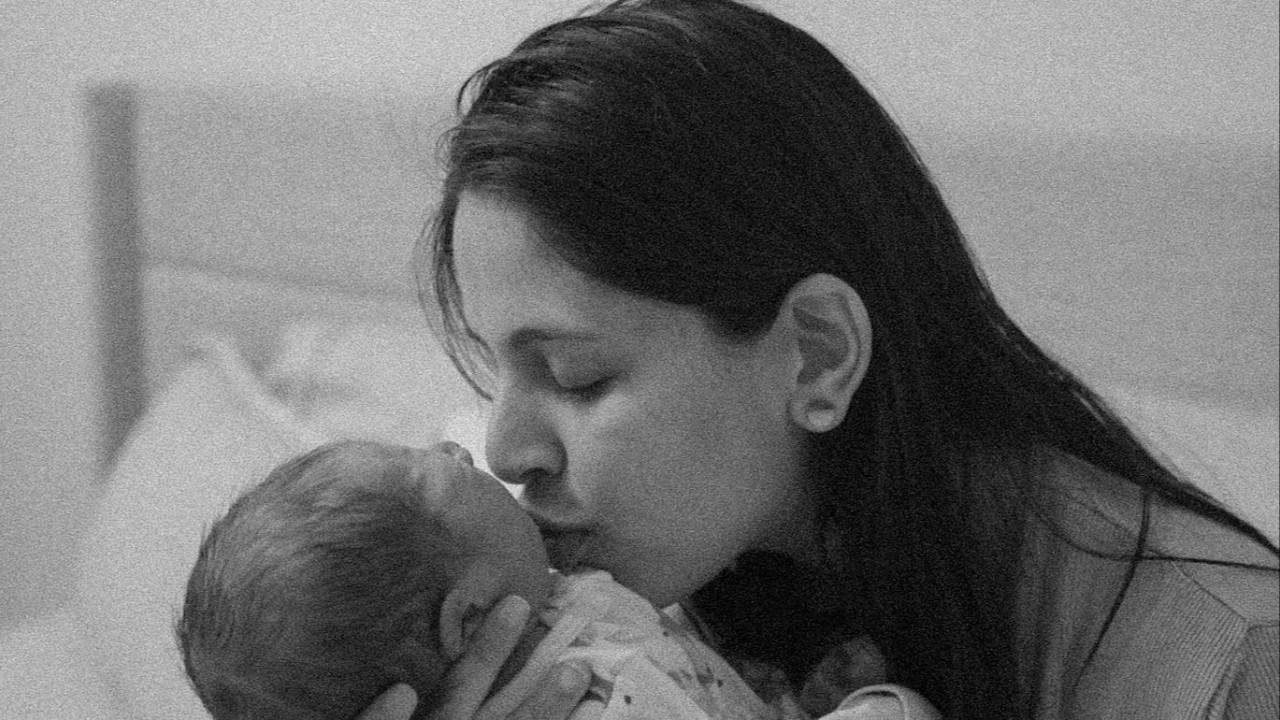
Shey Munoz has given birth twice at home in South Florida, and both times her baby arrived faster than anyone planned. Her first labor was under five hours from her first contraction. Her second was under two. Both times her husband set up the birth pool. Both times she never got in it.
If you're preparing for a homebirth and wondering what happens when your labor doesn't follow the script you've been handed — the forty-one weeks, the thirty-six hours, the calm playlist, the water — this conversation is for you.
The midwife who made the decision simple
Shey didn't grow up around homebirth. She assumed she'd do what everyone does: go to the hospital and have the baby. Then 2020 arrived and she started asking questions — about her region's cesarean rates, about hospital visitor limits, about who she'd actually want in the room. She found a midwife, and she almost chose the birth center as a comfortable middle ground. Then her midwife said the thing that settled it:
"whatever I do at home, I could do at the center. Whatever I could do at the center, I could do at home. There's nothing here that you won't have at home."
The birth center was forty minutes away; her midwife lived less than ten minutes from her house. It became a question of logistics, and the answer was home. Her twin sister, five hours north with a different midwife entirely, was making the same decision at the same time.
A first birth that was over before she expected it
Shey went into labor at 38 weeks and 6 days — days before her due date, which is not what she'd been told to expect as a first-time mom. First contraction and bloody show around 3:30 in the morning. She had no interest in water at all; the thought of it on her skin was repulsive, so she followed that. By six the contractions picked up and her mother arrived and started feeding her apples and cheese cubes.
By 8:18am, after a few pushes on the couch, her son was in her arms. No tub. No playlist. No affirmation cards, no Bible verses. Just a woman on a couch having a baby. And she wasn't shaken by any of it — she was mostly shocked, and she had nothing to compare it to.
Four months later she walked into her sister's house, her own baby on her hip, thirty minutes before her nephew was born.
The fear she borrowed from her sister
The second time, her sister went first — water broke at 11:45pm, daughter in her arms by about 1:05am. Her midwives lived fifty minutes away and didn't make it; her doula walked in with minutes to spare.
Shey was thirteen weeks pregnant, and it got into her.
She brought it to her midwife repeatedly. Instead of reassuring her, her midwife asked her to name it:
"you're just freaking out because you think that your birth is going to go just like your sister's… and if it does, it does. And if it doesn't, that's fine. Like, what is your fear?"
Named out loud, the fear turned out to be one specific thing: she didn't want to be alone. And the answer was equally specific. Her sister's midwives were fifty minutes away. Hers was eight minutes away.
7:19am to 9:12am
Her second son came at 39 weeks. She has a photo of herself at 7:19 that morning, taken for her weekly bump picture. By 9:12 he was born.
She'd called her midwife and said she'd let her know how things went over the next few hours. Her husband heard that, pointed out that three births between the two sisters had now gone extremely fast, and called the midwife back himself.
Shey labored curled on her side on the bed while the tub sat there, filled and unused. She counted through contractions on her toes, ten per toe, sixty per contraction: "I did 10 per toe… I had a hyper focus on something tangible." It's the same principle she teaches in the pregnancy circles at her midwife's birth center, where each woman gets a necklace of 108 beads. Shey didn't have hers. She had her feet.
Her midwife arrived around 8:15 and later told her that her face visibly softened the moment she walked in. Her water broke, she pushed three times, and her son was born.
"I keep saying my body and my baby were so generous to me."
The first thing she said, on video, was: I did it again.
Her mother, a cesarean, and what got handed down
Shey's mother gave birth to twins in India in the nineties by cesarean, after her water broke and labor didn't start. Four years later she had Shey's brother, in the era when one cesarean meant every birth after it was a cesarean too. She'd just arrived in a new country with no family nearby, and she wasn't going to fight a hospital about it.
She looks back on all of it with peace. Shey's read: "I think the way you perceive things is part of how you accept it."
That same woman then drove five hours to be at her daughters' births at home, trusting their bodies completely. Her first words after her grandson was born were that Shey had made it look easy.
Preparing for the part that comes after
Shey's work now is The Peaceful Postpartum, where she's a holistic sleep and motherhood coach certified through Isla Grace. Two things she said land hard. Mothers get blindsided around four or five months when their baby doesn't start sleeping through the night, because nobody told them what was normal. And the decision about returning to work: "moms going back to work is such a highly personal decision. And I think it's an extremely difficult one because the only other person you could truly unfold and unpack all that with is your spouse."
We prepare so carefully for one day. Shey's argument is that we should prepare, with the same care, for the years right after it.
Frequently asked questions
What is a precipitous birth?
A precipitous birth is one where the baby is born less than three hours after regular contractions begin. It occurs in roughly 1 to 3 percent of births in the United States. It isn't automatically dangerous, but it can leave very little time to get a provider to you. Some clinicians use a five-hour cutoff instead of three.
Sources: Suzuki S., "Clinical Significance of Precipitous Labor," Journal of Clinical Medicine Research, 2014; Cleveland Clinic, "Precipitous Labor."
Can you plan a homebirth if you tend to have fast labors?
Many women with a history of fast labor plan homebirths, and for some the short travel time is part of the appeal. What matters is a plan built for speed: how close your midwife lives, when you call her (early, not "in a few hours"), who is second on the list if she's delayed. Shey's midwife lived eight minutes away and she still called too late — her husband made the call that mattered. Bring this one to your own provider, since a prior fast birth raises the likelihood of another.
Are second births usually faster than first births?
Yes, on average, second and subsequent labors are meaningfully shorter. In the Consortium on Safe Labor data analyzed by Zhang and colleagues, women who had given birth before dilated more quickly than first-time mothers once labor passed about 6 centimeters, and their second stage was substantially shorter. Averages aren't predictions, though — the range of normal is enormous in both directions.
Sources: Zhang J. et al., Obstetrics & Gynecology, 2010; ACOG Clinical Practice Guideline, "First and Second Stage Labor Management," 2024.
How do you cope with contractions without a birth pool?
A physical focal point is one of the most portable coping tools there is: counting beads, counting breaths, counting toes, gripping a hand, rocking on a birth ball. The mechanism is attention — you give your mind one concrete thing to hold instead of leaving it free to read intensity as alarm. Shey put it plainly: "You're shifting your focus from that pain into like an item." Practicing one during pregnancy makes it far more likely you'll reach for it under pressure.
Is it normal for a baby to still wake at night at 6 or 12 months?
Yes. In a study of 388 infants published in Pediatrics, between 27.9% and 57% of babies at 6 and 12 months were not sleeping through the night, depending on whether "through the night" was defined as 6 or 8 uninterrupted hours. The researchers found no association between uninterrupted sleep and mental or psychomotor development, or maternal mood. Night waking was also considerably more common among breastfed babies.
Source: Pennestri M-H. et al., "Uninterrupted Infant Sleep, Development, and Maternal Mood," Pediatrics, 2018;142(6).
This article shares one mother's personal experience and is offered as encouragement and education, not medical advice. Anything about your own body, your baby, or your care belongs in conversation with your midwife or provider.
About the author: Katelyn Fusco is a homebirth mother of three, host of the Happy Homebirth podcast, and creator of Whole Mother Homebirth.
Lorem ipsum dolor sit amet, consectetur adipiscing elit. Cras sed sapien quam. Sed dapibus est id enim facilisis, at posuere turpis adipiscing. Quisque sit amet dui dui.
Stay connected with news and updates!
Join our mailing list to receive the latest news and updates from our team.
Don't worry, your information will not be shared.
We hate SPAM. We will never sell your information, for any reason.